
Dentrix Unscheduled Patients: The Weekly Follow-Up System That Fills Your Schedule
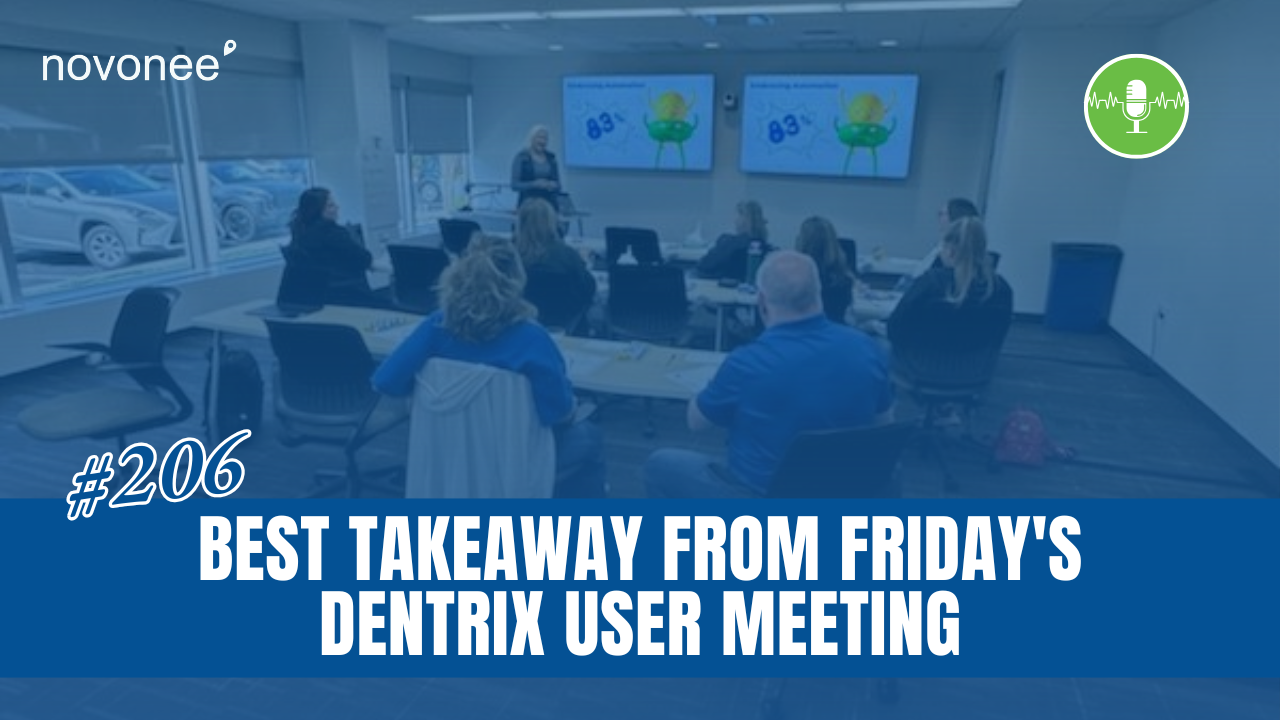
I just got back from one of my Dentrix user meetings on the East Coast, and I have to tell you, one of the most powerful takeaways didn’t come from me.
It came from an office manager in the room.
Listen on Apple Podcasts:
Listen on Soundcloud:
What made it even more interesting? She wasn’t even using Dentrix Core. She was using Dentrix Enterprise.
And yet, her biggest “aha moment” was something every dental practice needs no matter what software you use.
She said:
“The one thing I’m implementing on Monday is a weekly system for following up with unscheduled patients.”
That right there? That’s it.
That’s the difference between a full schedule and constant gaps.
Why Most Dental Practices Struggle With Unscheduled Patients
Let’s be honest, most practices think they’re following up.
You have:
- Automated texts
- Email reminders
- Maybe even recall systems running in the background
But here’s the problem…
Patients ignore them.
They get buried. Forgotten. Overlooked.
And suddenly you’re sitting there with:
- Open hygiene time
- Unscheduled treatment
- A doctor schedule that isn’t producing
This is where Dentrix becomes incredibly powerful if you actually use it intentionally.
And if your systems feel inconsistent or reactive, it’s usually not a people problem, it’s a systems problem. That’s why having clearly defined workflows matters so much. If you haven’t already, this breakdown on how SOPs create consistency in your dental practice is a great place to start.
The Two Dentrix Tools You Should Be Using Every Week
If you take nothing else from this article, take this:
You need a structured, weekly follow-up system.
And Dentrix already gives you the tools.
- Dentrix Continuing Care List (Unscheduled Recare)
This is your hygiene goldmine.
You can generate lists like:
- Prophy patients 6 months overdue
- Prophy patients 1 year overdue
- Perio patients 6 months overdue
- Perio patients 1 year overdue
These lists help you:
- Identify patients who haven’t scheduled
- Re-engage inactive patients
- Keep your hygiene schedule full
But here’s what most offices miss…
The Hidden Value: Finding System Breakdowns
The continuing care list doesn’t just show overdue patients, it exposes problems like:
- Patients with both prophy and perio codes
- Incorrect continuing care setups
- Broken appointments left on the schedule
That last one? Huge mistake.
Never leave broken appointments on your schedule.
That’s what your unscheduled list is for.
And this ties directly into something I teach all the time, your continuing care system isn’t just a list, it’s the lifeblood of your practice. If this feels messy or inconsistent, I highly recommend reviewing why continuing care drives patient retention and production.
- Dentrix Treatment Manager (Unscheduled Treatment)
This is where your production lives.
Let me say that again:
This is how you fill your doctor’s schedule.
Every day, patients leave your office saying:
- “I need to think about it”
- “I’ll check my schedule”
- “I’ll call you back”
And then…
Nothing.
Those patients don’t disappear, they sit in your system, untouched.
The Treatment Manager gives you:
- A list of unscheduled treatment
- Opportunities for follow-up
- A clear path to increase case acceptance
This is not just a report.
It’s revenue waiting to be scheduled.
The Real Problem: Reactive vs. Proactive Follow-Up
Here’s where most practices go wrong.
They only call patients when there’s a hole in the schedule.
And it sounds like this:
“Hey… you’re overdue and we have an opening tomorrow…”
Patients can hear the desperation.
And they say no.
What a High-Performing Follow-Up System Looks Like
Instead of reacting, you need to lead.
A weekly follow-up system should:
- Be scheduled (not random)
- Be consistent (every week)
- Be intentional (not tied to openings)
And the conversation changes completely.
Instead of:
- “We have an opening…”
You say:
- “I just wanted to follow up, do you have any questions about the treatment we discussed?”
- “Is there anything we can clarify for you?”
- “Can I help you with financing or next steps?”
Now you’re not selling.
You’re helping.
And that’s what builds trust and gets patients scheduled.
And if your team struggles with consistency here, it’s usually because there’s no defined workflow. This is where understanding your numbers and systems together becomes powerful. If you want to go deeper on that, take a look at how Dentrix KPIs guide better decisions and follow-up.
How to Implement This in Your Practice (Simple Steps)
Here’s exactly what I recommend:
Weekly System
Pick one day per week for follow-up.
Pull Your Lists
- Continuing Care List (unscheduled recare)
- Treatment Manager (unscheduled treatment)
Assign Responsibility
Have a specific team member own this process.
Track Activity
- Who was contacted
- What was discussed
- Next steps
Stay Consistent
This is where the magic happens.
Not once. Not occasionally.
Every single week.
What This Means for Your Practice
This one system can:
- Fill your hygiene schedule
- Increase case acceptance
- Reduce last-minute cancellations
- Improve patient retention
And the best part?
You already have the tools inside Dentrix.
You just need to use them with intention.
FAQs About Dentrix Unscheduled Patients
- How do I find unscheduled patients in Dentrix?
Use the Continuing Care List for hygiene patients and the Treatment Manager for unscheduled treatment.
- Why aren’t my automated reminders working?
Patients often ignore texts and emails. Manual, personalized follow-up is still essential.
- How often should we follow up with patients?
At least once per week using a structured system, not just when your schedule has openings.
- What’s the difference between recare and treatment follow-up?
- Recare = hygiene appointments (prophy/perio)
- Treatment = diagnosed procedures not yet scheduled
- Who should handle follow-up in the office?
Typically a front desk team member or treatment coordinator, but it must be clearly assigned.
If you’re reading this and thinking, we don’t have a system for this… you’re not alone.
But now you know exactly where to start.
And if you want help building this into your workflow, that’s where I come in.
My friend, I look forward to watching your journey of becoming a high-performing dental team.
Stay connected with news and updates!
Join our mailing list to receive the latest news and updates from our team.
Don't worry, your information will not be shared.
We hate SPAM. We will never sell your information, for any reason.